
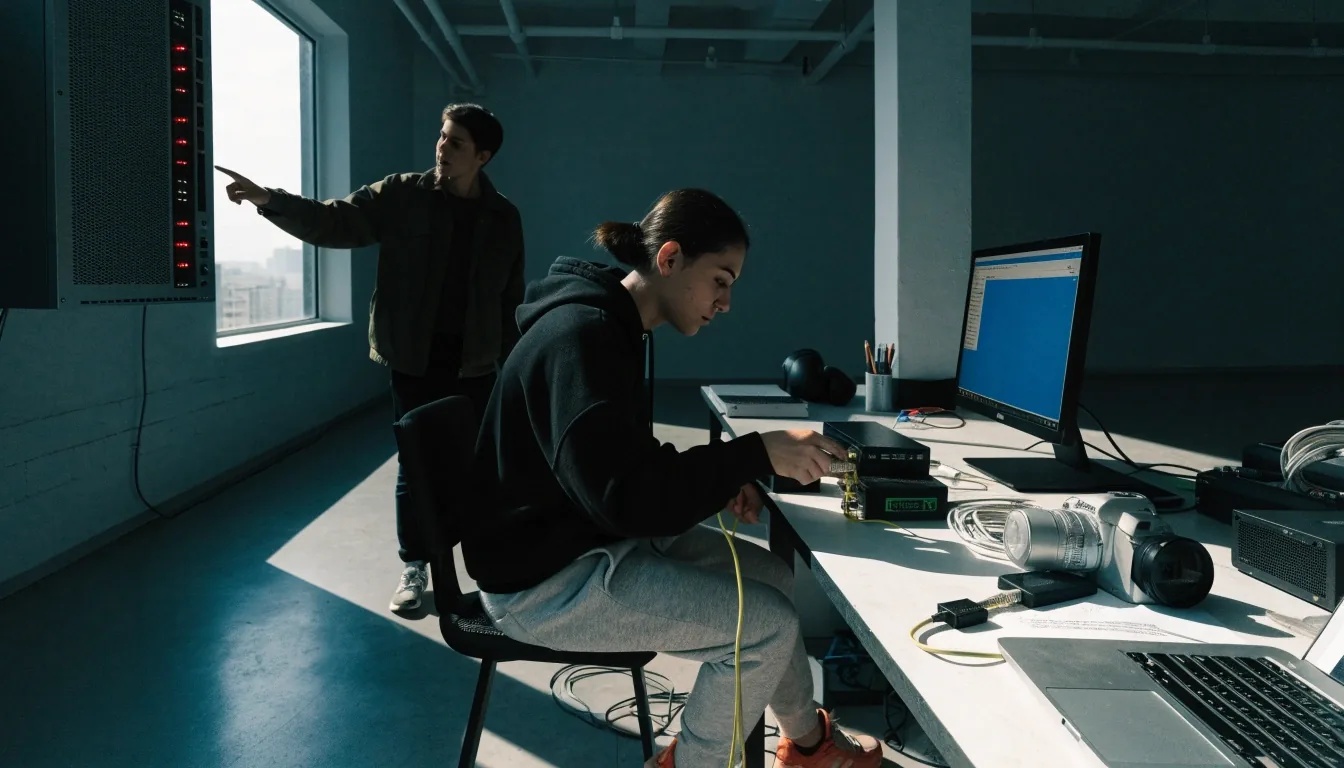
Career track · Security operations
Cybersecurity Track
Network fundamentals first, then defensive security in hands-on labs. Built to prepare you for CompTIA Network+, CompTIA Security+, and Cisco CyberOps Associate.
Start here
No prior security role required. Basic computer confidence and steady weekly study time are enough to begin.
Ask about the trackAlso on the panel
Review the plan before you commit
Curriculum overview
What the cybersecurity track covers
The track runs in three passes: understand the network, learn how attacks move through it, then practice the defensive response. Each pass pairs short reading with lab work you run yourself, so you build a habit of checking your own assumptions before you touch a live system.
Pass one
Network fundamentals
IP addressing and subnetting, switching and VLANs, routing basics, DNS and DHCP, wireless, and the tools you use to see traffic on a link. You learn to read a packet capture and explain what you are looking at before moving on to defense.
Pass two
Threats and attack paths
Phishing, credential theft, malware behavior, common web application weaknesses, and how a small foothold grows into a wider incident. The goal is not to become an attacker; it is to recognize the shape of an intrusion in logs and alerts.
Pass three
Defensive security and response
Hardening endpoints and servers, identity and access control, firewalls and segmentation, logging and monitoring, and a first pass at incident response procedure. Labs walk through detection, triage, and writing up what happened in plain language.
Teaching method
How defensive security is taught here
Every defensive topic arrives with something to do. You configure a firewall rule, read the log it produces, and then explain in writing why the change either helped or did not. Instructors review your lab notes and correct your reasoning, not just your final answer — because in a real security operations role, the reasoning is what your team relies on.
Sessions run online with a mix of recorded walkthroughs you can pause and re-run, live instructor time for questions, and labs you complete on your own schedule. Work is submitted and reviewed weekly, so you always know where you stand before the next topic opens.
Guided labs
A sandboxed environment per topic, with a defined task and a written brief. Nothing is graded on speed — only on whether the result works and you can explain it.
Instructor review
Weekly feedback on your lab notes and configuration choices, with the reasoning explained so you can apply it to the next scenario.
Practice questions
Timed question sets styled like the certification exams, so the wording and pacing are familiar before exam day. Explanations follow every answer.

Certification preparation
Which certifications the track prepares you for
Each certification below maps to a block of the curriculum rather than a separate add-on. You cover the exam objectives as part of the track, then practice with timed question sets. Passing an exam is your result to earn — the track prepares you and does not guarantee a score.
Foundation
CompTIA Network+
Covers the networking half of the track: addressing, switching, routing, network services, and troubleshooting. Most learners sit this first, because the defensive material assumes you can already follow traffic across a network.
CompTIA Security+
The core defensive certification and the main target of the track. Objectives line up with the threat, architecture, implementation, operations, and governance material you work through in passes two and three.
Cisco CyberOps Associate
For learners heading toward a security operations center role. Adds monitoring, analysis, and incident response work on top of the Security+ foundation, with practice on reading alerts and documenting findings.
Exam fees, scheduling, and voucher rules are set by the certification bodies, not by Rob in Hood Digital. Plan your exam dates around your own study pace.
Weekly rhythm
A week in the track
The track is built around a repeating weekly cycle, so you always know what to do next. Most learners spend six to eight hours a week; the labs are the part that takes the longest, and that is intentional.
See the full schedule formatDays one and two
Read and watch
Short lessons introduce the week's topic, with recorded walkthroughs you can pause and repeat. Reading is deliberately compact so you reach the lab quickly.
Days three and four
Run the lab
You complete the scenario and write up what you did, what you expected, and what actually happened. This written step is where most of the learning lands.
Day five
Review and questions
Instructor feedback arrives on your lab notes, followed by a timed question set. Anything you missed is folded into the next week's warm-up.

Who this track fits
Built for people moving into security work
The track suits career changers with some IT exposure, help desk and support staff who want to move toward security operations, and administrators who have inherited security duties without formal training. It assumes comfort with a computer and a willingness to read logs carefully — not a prior security title.
Common questions
Before you start the track
Still deciding? Ask us directly at the contact page and we will walk through the fit for your background.
Do I need a security job before I enroll? Open
No. The track starts at network fundamentals and assumes no professional security experience. Comfort with using a computer, installing software, and following instructions carefully is enough to begin. Learners with help desk or systems administration backgrounds often move faster through the first pass.
How much time should I plan each week? Open
Most learners set aside six to eight hours a week. The lab and the written review take the longest, so a schedule with two longer sessions tends to work better than several short ones. You can move more slowly; the weekly rhythm is a guide, not a deadline.
Do the labs run on my own computer? Open
Some exercises run locally with tools you install yourself, and others run in a provided sandbox so nothing you break affects a real network. The track tells you which is which before each lab, along with the setup steps.
Are exam fees included? Open
Certification exam fees and scheduling are handled by the certification bodies. The track covers the objectives and the practice questions; you register and pay for exams separately when you are ready. Ask us and we will point you to the current official pricing pages.
Which certification should I take first? Open
For most learners, Network+ first, then Security+, then Cisco CyberOps Associate if you are aiming at a security operations center role. If you already hold Network+, you can start with Security+ and use the networking material as review.
Next step
Ready to review the cybersecurity track?
Send us a note about where you are starting from and which certification you are aiming at. We will tell you what the track covers, what it assumes, and what to prepare before the first week — and if a different track fits better, we will say so.
Academy details
- Rob in Hood Digital
- 1200 Cyber Security Way, Reston, VA 20190, USA
- +1-703-555-0826
- info@rob-in-hood.digital
- Monday–Friday, 9:00 AM – 6:00 PM